Labels

Brands (125) Consumer (147) Kantar (20) Market (197) New Products (107) Promotion (19) Retailer (118)
Showing posts with label Market. Show all posts

Tuesday, 2 December 2014

Kingsmill unveils festive Christmas tree shaped crumpets


Kingsmill unveils festive Christmas tree shaped crumpets
Kingsmill is launching new Christmas tree shaped crumpets to help retailers add value to the category over the festive period by encouraging impulse purchasing and attracting new shoppers.


Ky Le Vuong, group brand manager at Allied Bakeries, explains: “Crumpets help retailers to drive value and volume growth in the bakery category during the winter months. They’re a warming evening treat for mums looking for some well-earned ‘me time’ after the kids have gone to bed, and an increasingly popular after school snack for children because they’re more substantial than crisps and chocolate.


“We know that consumers are looking for novel and fresh ideas to inspire them at breakfast and snacking time, while retailers are looking for products that support in store events and help them to drive incremental sales by capitalising on seasonal occasions. Our festive shaped crumpets play to both of these needs and will help retailers grow sales in the bakery category in the run up to Christmas.”


The success of novelty ranges in this category was seen last year when Asda launched its limited edition Christmas tree crumpets. The range attracted 229,000 new crumpet shoppers in Asda, compared with the previous year.
Kingsmill Christmas tree shaped crumpets launched in November as a 6-pack format, with a RRP of £1.


Source: Allied Bakeries

Wednesday, 5 November 2014

UK first breakfast cafe to open in London


A pair of cereal entrepreneurs are on a mission - to help you find your perfect bowl


Cereal cafe
Cereal Killer Cafe founders Alan and Gary Keery describe themselves as "cereal obsessives" Photo: cerealkillercafe.co.uk

If you’re a fan of Frosties, lust after Lucky Charms, can’t get enough Cornflakes or find yourself wanting Weetabix at all hours of the day and night, then make a note to be in Shoreditch on the 10 December. 
 
That’s when the Cereal Killer Café opens its doors on London’s Brick Lane – the UK’s first cafe completely dedicated to boxes of the breakfast staple.
Open from 7am - 8pm, customers will be able to choose from a menu of 100 cereals from around the world for either breakfast, lunch or dinner.


Cereal aficionados will also be able to customise their bowl with 12 different varieties of milk (catering for 'vegans, vegetarians and awkward children’) along with 20 different toppings.


The concept for the Cereal Killer Café came from identical twins and self-confessed cereal obsessives Alan and Gary Keery from Belfast.


The pair hit upon on the idea when they wanted a bowl of cereal one afternoon, but none of the usual lunch spots catered to their craving.


To fully transport customers back to their childhoods, the cafe will be decked out with hundreds of pieces of cereal memorabilia from the 80s and 90s, as well as vintage TVs playing old cartoons.
Small bowls will set you back £2.50, medium bowls come in at £3.00 and the largest option will sell for £3.50.


Watch the project video:


Source: www.telegraph.co.uk, Rachel Jones, Social Media Content Editor, 04 Nov 2014

Monday, 3 November 2014

Significant lunchtime opportunity within convenience stores


57% of shoppers who buy a sandwich in convenience stores don’t buy any accompanying snack item, according to research from him! research & consulting, revealing a huge opportunity for driving incremental purchases in-stores. .

“Outside of ‘snacking’, lunch remains the key food-to-go occasion within convenience”, reveals Katie Littler, Insights Director at him! “With significant opportunities lying in ‘lunch completion’ via complementary categories.”

The 2014 CTP research confirms that ‘food to go’ is fast becoming a core mission for convenience. In a like for like year, the number of shoppers on a FTG mission grew +5%, and share of trade spend +4%, meaning that 15p in every pound spent in convenience stores is now spent on food and or drink to go.
NamNews - Tuesday 28th October 2014

Family time takes centre stage


Forget notions of the iPhone generation ushering in the age of the individual: five of the seven most popular leisure pursuits in Britain today involve family members enjoying quality time with each other - according to new research from intu.


Dashing fears of a broken society and the decline of the family unit, these latest figures from the UK's leading shopping centre operator suggest the majority of adults jealously guard their free time, prioritise leisure pursuits with family members and have an active attitude towards getting out of the house to enjoy their downtime.
 
Eating out with family and friends (55%), seeing family and relatives (55%), cooking a family meal (41%) and having a family trip out (40%) were all top choices for how people spend their free time. Further, people were clear about the real benefits that leisure time had on their lives: 50% said it strengthened family bonds, 38% said it rekindled friendships and 32% said it charged them up for the week ahead at work.
 
The research forms part of a major forthcoming report from intu, which explores how people around the UK choose to spend their valuable leisure time during the week and weekend, with whom and what they spend their money on.


Beyond the daily staples of watching TV and reading, the majority of Britons value shared experiences. Further, after a period of austerity when common budget cutbacks included staying at home in the evenings (44%) and avoiding eating out (46%)*, many are now opting to go out to enjoy their free time with eating out with family or friends overtaking meeting for drinks.
 
Top 10 ways we like to spend our free time

    1   Watching a film/ TV at home                 79%
    2   Reading                                               63%
    3=  Eating out with family/ friends              55%
    3=  Seeing family/ relatives                       55%
    5   Going out for drinks with family/ friends 44%
    6   Cooking a family meal                          41%
    7=  Having a family trip out                       40%
    7=  Investing time in my hobbies               40%
    9   Gardening                                           37%
    10  Going to the cinema                            33%


Additional findings and themes:
  • Eat out nation. With sharing a meal out now more popular than having a drink with friends at the local, British leisure habits may be becoming more European, where a family meal out together is a staple of the week. Young people are now just as likely to eat out as drink out - in fact, more 18-25 year olds prefer going out for dinner with family and friends (60%) than going out for drinks (57%).
  • House proud nation. The report shows that double the number of people would opt to spend their free time buying something for the home (31%) than something for themselves (16%).
  • Health kick. With obesity warnings constantly making headlines, it appears that 18-24 year olds are on a health kick, with 44% choosing the gym as one of their preferred leisure activites.
  • The big read. At a time when the nation's literacy levels have come under scrunity, the new research reveals that two thirds of Britons chose reading a book as a top leisure activity (63%). The popularity of a trusty read is even across men and women of all ages.


Trevor Pereira, commercial director at intu commented: "The aim of this research was to shed fresh light on how people today are spending their free time and who they are spending it with. We uncovered some really interesting results. As a nation we are really waking up to the benefits of leisure and its ability to strengthen family bonds, rekindle friendships and even energise us for the working week. At a time when there has been so much focus on the drivers behind economic recovery and consumer confidence, the importance of active, enriching leisure time as a trigger to a positive consumer outlook has not been fully explored.


"In our shopping centres across the UK, we have seen a marked change in recent years. Our customers want to do more than just shop at today's shopping centre; they want a place to meet and share time together, whether for a coffee with friends or a family meal out. They are increasingly looking for exciting leisure experiences and events that can be shared by the whole family. Our shopping centres offer a huge variety of leisure activities, from LEGO interactive play areas, Sea Life centres and indoor skiing, to bowling, dining and cinema options. Over the last 12-months we have brought Elephant Parade back to the UK, held national free arts festivals, run immersive and engaging fashion events, hosted thousands of students at our student evenings and held food festival weekends which have been enjoyed by millions of people. Creating uniquely compelling leisure experiences is the future of the shopping centre in Britain and we are driving this change."


Source - intu http://www.intugroup.co.uk

Friday, 26 September 2014

Cuisine de France to roll out 120 refreshed in-store bakeries


Cuisine de France, part of food business Aryzta, has said it aims to roll out 120 new-look in-store bakeries over the next year. 

It will target independent retail convenience stores, which it claims account for 72.1% of stores and almost £6 in every £10 spent in convenience (58.9%).


The redevelopment of its in-store bakery package offers customers products, display, staff training and sales support.


As part of the initiative, the company will launch new product ranges, packaging and display units with an “artisan bakery theme”. Stores that have already implemented the fresh look have seen an increase in sales of up to £800 per week.

Mariam French, head of marketing UK for Aryzta Food Solutions, said: “This is much more than a brand relaunch, it’s a completely fresh approach to in-store baking, enabling our customers to redefine the category and to use Cuisine de France as a flagship brand to enhance the shopping experience.


Significant improvements have been made to all the recipes in Cuisine de France’s new ‘hero range’ across both core bakery products and an array of new speciality breads.

The hero range includes French bread, Viennoiserie, sweet treats, rolls and speciality breads. The French bread has been redeveloped to include 100% French wheat, and 25% liquid sponge to improve flavour and texture, said the company.


Aoife Kenny, head of retail sales, said: “Convenience store shoppers are focusing more on freshness. That’s why we’re highlighting the benefits of baking little and often, rather than the traditional ‘one bake a day’. This ensures that ‘freshly-baked’ products are readily available, which increases shopper satisfaction,”


Research by Aryzta found that shoppers at ISB convenience stores spend 1.8 minutes longer in the shop than regular convenience store shoppers, and spend around £3.50 more.


The brand said the convenience sector was continuing to grow at 5% year on year.
 
 
Source: www.bakeryinfo.co.uk , 26th September 2014

Wednesday, 10 September 2014

Why coffee shops are replacing pubs in Britain?


The UK has among the lowest coffee consumption per person in Europe and we are now drinking less than in 2006. So why are companies such as Costa Coffee growing so fast?


Customers order drinks at a Costa Coffee shop, owned by Whitbread Plc., in London, UK

Costa Coffee brewed up a 7.3pc increase in like-for-like sales in the 11 weeks to August 14, rounding off yet another successful quarter for the chain, which began in 1971 when two brothers, Sergio and Bruno Costa, starting selling their special blend to local caterers.


The chain, part of the Whitbread leisure group, has posted consistently strong sales growth over the last few years, reflecting the wider trend in the UK coffee shop market.


The overall market in the UK recorded a 6.4pc increase in sales in 2013 and there were 16,501 coffee shops across the country by the end of last year.


No cooling is expected this year either. Companies such as Whitbread have continued to expand rapidly. In Costa's case, it has added a further 76 outlets over the last few months, taking its running tally in the UK to 1,831. The company believes there is thirst for plenty more and Whitbread is eyeing 2,200 branches of Costa in the UK by 2018.

Despite 15 years of rapid expansion, analysts says Britain's coffee shop sector remains one of the most successful in the UK economy and will continue to expand. So why has a nation of tea drinkers become so obsessed with milky lattes?


According to analysts at Barclays, the way Britons are drinking coffee has changed. They point out that, although the coffee shop market, has continued to grow, coffee consumption per head hasn't. In fact, consumption levels are now lower than they were in 2006. Britons consume 2.8kg per head, just a fraction of the 7kg consumed in Germany, 7.1kg in Sweden and 5.5kg in France.

"This means that the growth of coffee shops has in no way increased the UK consumption of coffee," Barclays leisure analyst, Vicki Stern, said in a recent research note. "Rather, the way in which coffee is being consumed has changed with people now visiting coffee shops where they might previously have consumed instant coffee at home or in the workplace."


Andy Harrison, chief executive of Whitbread, believes coffee shops have now filled a hole in British society that would previously have been met by pubs. Families and women in particular use coffee shops for social gatherings, he says. He also points out that women now have greater spending power than in the past. 
 
"Think of the coffee shop as a social venue," he says. "What we have seen is the coffee shop market has grown at about 5pc per annum throughout the recession even in the most economically challenged parts of the UK. We think the reasons behind that are to do with things like the growth of female independence, female spending power. Over half of our customers are women.
"People talk about the pub as a meeting point but pubs were more about males and the evening, coffee shops are [open] all day, more female [orientated] and certainly more family."


He also believes coffee shops have been boosted by people shopping more online. Instead of spending their Saturdays trawling the shops, Britons are meeting up with friends at their local cafe
 
By comparison, the number of pubs in Britain has been in steep decline for a number of years. The Campaign for Real Ale (CAMRA) says British pubs are closing at the rate of 31 a week, although many are now fighting back by improved food and by serving breakfast and coffee throughout the day. 
 
At one point, Britain's coffee shop market will become saturated. But analysts don't believe that time will come any time soon.


"There are still thousands and thousands of places in the UK that don't yet have a decent coffee experience," says Jeffrey Young, managing director of Allegra Stategies, which produces detailed research on the coffee market. 
 
Once Britons may have been happy with an instant Nescafe at their desk or at home but they are now venturing to their local coffee shop for their caffeine hit instead. Artisan coffee shops are also driving interest - in much the same way that craft beers are helping to revive the brewing industry. 
 
"Coffee shops are part of the fabric of our society now," says Young.


Source: www.telegraph.co.uk, Nathalie Thomas, 09th September 2014

Monday, 8 September 2014

Shoppers demand British eggs in prepared foods

Screen shot 2014-08-18 at 16.19.14

New research shows that more than 40% of shoppers are concerned about the quality and safety of ingredients in prepared food from supermarkets – and many were appalled that some retailers’ products contain foreign eggs.

Eggs, along with chicken and beef, raised the greatest concern.
The research showed a strong demand for British eggs, with 70% of shoppers saying that prepared foods should always use British eggs and 90% saying that the packaging should display country of origin for eggs.
When asked what they thought about foreign eggs being used, more than 60% expressed concern.
Consumers even talked of being ‘appalled’ that this might be the case.
Demand for the British Lion mark was also strong, with 78% of shoppers keen to see the use of the British Lion mark on prepared foods to provide added quality and safety reassurance.
Ian Jones, Chairman of British Lion egg processors, said:
“The message from shoppers is clear – they want British eggs in prepared food, whether it is a quiche, a scotch egg or an egg sandwich, and they want the packaging to state the country of origin.
“Very little packaging provides this information and many consumers would be shocked to find that more than a third of eggs used in manufactured food products are currently imported.
“The quality of the ingredients in prepared food has come under intense scrutiny in recent years, particularly following the horse meat scandal.
“There have also been ongoing issues with the safety of imported eggs and egg products, with cases of salmonella and dioxin contamination reported so it’s little wonder that consumers are looking for reassurance.
“The simple solution is for retailers and manufacturers to specify British Lion egg products to guarantee a quality ingredient produced to the highest standards of food safety.
“If your packaging also carries the British Lion mark, consumers get the reassurance they want, as well as recognising that you are supporting British producers and providing the added food safety and security of the British Lion.”


Source: fdin.org, 20th August 2014

Monday, 21 July 2014

Healthy growth in the Health & Wellness sector


Health and Wellness has become a global trend with many new and innovative products now available on the market to suit all dietary requirements, from vegan to nut-free to gluten-free.

The ‘free-from’ sections in supermarkets are occupying more and more space as the demand from consumers for new products and a wider variety grows.

According to the latest Euromonitor report, the demand for ‘free-from’ products has grown by 8% in Ireland, which makes it the fastest-growing health and wellness category in 2013.

This could be due to consumers being much more willing to pay extra for ‘free-from’ products due to the perceived health benefits.

Tesco in the UK have taken advantage of this new trend and recently launched the Lifestyle Food Fair in over 70 Tesco Extra stores across the UK; it will run until August 31st. During this time, Tesco have expanded their selection of ‘free-from’ and health and wellness related products to occupy a significantly larger space in store than they normally would. The Lifestyle Food Fair has seen Tesco ‘travel the world looking for a range of new products to support common dietary needs and lifestyle choices.’    

In Ireland, SuperValu have taken first mover advantage of the Health and Wellness trend and launched a new health and wellness section in their Lucan store in Dublin. It occupies a significantly larger space than most ‘free-from’ sections in other supermarkets and contains a variety of products, including an extensive range of  ‘free-from’, vegan; functional foods, such as protein powders; and drinks and supplements, such as vitamins.
            
As obesity levels are on the rise, consumers are seeing the need to address the issue, and so we are seeing more and more weight loss products become available on the market.  SuperValu has again taken advantage of this and, within their health and wellness section in Lucan, they have set up a centre aisle station with a weighing scales, height measure, BMI information and iPads which can be used by customers for product research and to find out more about how they can become healthier. 

Consumers are spending more of their discretionary income on health and wellness products - if there was ever a market for new and innovative products, here it is! 


Source: Georgia Hickey, International Markets, Bord Bia – Irish Food Board, 18/07/2014

Friday, 18 July 2014

It may be too late for Tesco and Sainsbury's as the rise of Aldi and Lidl looks unstoppable


The "big four" supermarkets took their eye off Aldi and Lidl, and now British shoppers can't get enough of them


A 5 metre high shopping bag in front of St Edmundsbury Cathedral in Bury St Edmunds, announces the opening of discount supermarket Aldi's 500th UK store

Aldi's most recent results showed its average basket size has grown close to £19, just behind Sainsbury's and Morrisons
 Photo: PA
According to Warren Buffett, it takes 20 years to build a reputation. If that is the case, then Tesco – the company in which Buffett is one of the biggest investors – has a major problem.
 
The German discounters Aldi and Lidl arrived in the UK in 1990 and 1994 respectively. But after two decades of highs and lows, they have finally built a proposition that resonates with UK consumers, and they are reshaping how we shop.


YouGov revealed this week that the British public has a new favourite brand. Aldi has overtaken John Lewis, the BBC iPlayer and Samsung to top the charts. 
 
The BrandIndex measures the positive and negative sentiments generated across media and word of mouth. YouGov’s Brand Index also saw Lidl enter into the top 10 for the first time, at number four. The other grocery retailers in the top 10 were Waitrose, at five, at Sainsbury’s, at 10.
Given that Aldi presently represents less than 5pc of spending on groceries in the UK, this is a remarkable achievement.  
     
It shows the intrigue surrounding the brand, and highlights the potential for Aldi to grow sales.


Tesco, Asda, Sainsbury’s and Morrisons have allowed the interest in Aldi and Lidl to develop as families have looked for ways to battle declining household incomes. Now there might not be anything they can do to stop even more shoppers exploring the discounters.

There has been publicity this week about Lidl attempting to attract more affluent customers by introducing fine wines into London stores.
But those who shop regularly at Lidl know it already caters for a broad range of customers thanks to its award-wining champagne and, at Christmas, serrano ham and lobster.


This has been at the heart of Aldi and Lidl’s rapid growth since 2010 – they have broadened their product range and destroyed perceptions that their food is low quality by investing in distinctive marketing and new products. 
 
At Aldi, for example, Matthew Barnes and Roman Heini, who became managing directors in 2010, have expanded the number of products the company sells from 800 to almost 1,500 and introduced the premium “Specially selected” range.


This move was the result of wide-ranging review into customer perceptions when they took over, which found that shoppers wanted Aldi to become “more British”. Its fresh meat, milk and eggs are all now sourced from Britain. 
 
The phrase “discount retailer” does not accurately reflect Aldi and Lidl. Indeed, many City analysts are already referring to the businesses as “limited assortment discounters”.


This is because the secret to their business model is based on the fact they sell fewer products than a typical Tesco. While Aldi sells 1,500, a Tesco supermarket can sell 40,000.


This limited range is connecting with shoppers. Ronny Gottschlich, the UK boss of Lidl, has put it succinctly. “If you [and another customer] don’t know each other, would you like to pay for his choice of a different type of water? If you go to another retailer that has got 20 different types of water, someone has got to pay for that space, someone has got to pay for that rent.”
The realisation that Aldi and Lidl offer limited choice – not limited quality – has sent shoppers flocking through the doors.


For Gottschlich, this has attracted the so-called “Maidstone Mum”, a mother from the A or B socioeconomic group who previously would have been embarrassed to be seen in a Lidl store.


Worryingly for the traditional supermarkets, visitors to Aldi and Lidl like what they see. Anecdotally, for example, Telegraph readers say they appreciate the consistent pricing, the simple store layouts and the quality of fresh food.
Some of the stripped-backed characteristics of the store, such as the lack of a loyalty card or customers packing their own bags away from the till in order to speed up the paying process, are not proving a barrier.


Aldi and Lidl sales are growing because of spending by these new customers, but also because existing customers are spending more. Aldi’s most recent results showed its average basket size has grown close to £19, just behind Sainsbury’s and Morrisons.


The parent companies of Aldi and Lidl, Aldi Sud and Schwarz Group, are two of the biggest retailers on the continent.


This means that they can use their scale and geographical reach to source goods across the continent.


This buying power, combined with the limited range of the stores, makes Aldi and Lidl powerful rivals to the “big four”.


They are private companies operating a different business model to the listed Tesco, Sainsbury’s and Morrison. Aldi and Lidl are prepared to reinvest their profits into new stores and products, while pressing their margins further down by cutting prices. However, Tesco, Sainsbury’s and Morrisons have dividends to pay and shareholders to please


This is why the momentum behind Aldi and Lidl will be difficult to stop. The discounters now find them themselves in a virtuous circle where rising revenues lead to investment into better stores, food and marketing, which in turn boosts revenues further.


The “big four” allowed the discounters to sneak into this position by not offering enough help to hard-pressed consumers.


With like-for-like sales declining in hypermarkets and online revenues growing, the “big four” sought to protect their bottom line and their margins. They focused on defending themselves from each other – by introducing price-match schemes, for example – and took their eye off the progress Aldi and Lidl were making within their businesses.


The established grocery retailers still have powerful unique selling points to offer shoppers, including their choice, British heritage and convenience. But, with the exception of Sainsbury’s and Waitrose, they have been unable to get this message across to shoppers. Many City analysts – such as David McCarty, at HSBC, and Bruno Monteyne, at Bernstein – believe that Tesco has still not done enough to close the gap with discounters despite the start of a price war.


In France, it has taken a radical back-to-basics overhaul by chief executive Georges Plassat to get Carrefour back on track, including deep price cuts and store revamps.


Carrefour – which rivals Tesco for the position of the world’s second biggest retailer – this week reported an increase in like-for-like sales in France and out-of-town hypermarkets.


The retailer has endured similar challenges to Tesco in the UK, but is about two years further down the turnaround cycle.


Aldi and Lidl, buoyed by growing sales at existing stores, plan to double their
store numbers in the UK over the next decade. They are not going away.
In the UK, the most recent industry forecast from retail trade body IGD predicts that sales for the discounters will double to £21.4bn within five years. This would mean the discounters account for £1.05 in every £10 spent on groceries by 2019.


But perhaps the clearest evidence that the momentum behind discount retailing is unstoppable was provided by Sainsbury’s. The company is to relaunch Netto as its own discount chain. If you can’t beat them, join them.


Source: http://www.telegraph.co.uk/finance/newsbysector/retailandconsumer/10974773/It-may-already-be-too-late-for-Tesco-and-Sainsburys-the-rise-of-Aldi-and-Lidl-looks-unstoppable.html

Monday, 7 July 2014

Huge opportunity for children's gluten free products

The market for gluten-free children’s food will be a big area for growth, predicts market research firm Mintel – but mainstream brands are yet to capitalize on the opportunity.

More parents are introducing their babies to food via a special diet, creating a demand for gluten-free baby products like porridge and biscuits. Across Europe, 42% of all new baby food products launched are labelled as gluten-free, according to Mintel GNPD data - a trend it found was already starting to translate into a market for gluten-free children’s food. Yannick Troalen, consultant at Mintel, said it was this kids' market that held huge promise for future growth.

"More and more babies and toddlers are used to gluten-free, and mums believe that gluten-free is a better diet for their kids," he told attendees at Limagrain's Gluten-Free seminar, held last week in France.

While some babies were diagnosed celiac, he explained the demand was also being fueled by an increased consciousness of allergens among many parents."

The interesting thing with the rise of gluten-free baby foods is that once the mum buys gluten-free products, she might want to stick with this diet if the baby is healthy

"When the baby grows up and switches to more conventional foods, perhaps parents will be looking for gluten-free alternatives [to baby food]. We believe there will be opportunities in the future for kids’ brands, and gluten-free products targeting kids.


Kids' gluten-free on the rise

In 2013, 10.7% of children’s food in Europe claimed to be gluten-free, compared to 5.3% in 2010 (Mintel GNPD). "When it comes to kids’ food in Europe, the availability of products targeting kids is increasing: it has doubled over the last three to four years," Troalen said. "There are more and more options for kids.

Gluten-free specialists were the first to launch kids’ ranges. Mainstream brands have yet to capitalize on this opportunity."

One product launch from a big brand was Kellogg’s gluten-free variety of Rice Krispies in the US. The product was made from whole-grain brown rice but without barley malt, which is the source of gluten in original Rice Krispies, and was produced in a separate facility. The product generated $9.2m in its first two years.


Winning over the parents

If one member of a household ate gluten-free foods, the rest of the family was likely to turn to the same products. "Winning over the mother means the entire family is likely to eat and drink the same free-from brand," Troalen said.

People with celiac disease have to eat gluten-free products, as they react to the gluten in foods such as wheat, rye, barley and spelt. In Europe, a product claiming to be gluten-free must not exceed gluten of 20 mg/kg.

A separate category of consumers suffer from non-celiac gluten sensitivity, where they have a gluten intolerance (18m Americans have non-celiac gluten sensitivity, which is six times as many as those with celiac disease).

Other consumers eat gluten-free products because they deem them to be healthier or want to avoid potential allergens.

Source: foodnavigator.com
     

Friday, 4 July 2014

Private Label is the future in Europe


European Private Label brand sales exceeded branded products sales in Europe in 2013. In Spain alone, private label products were the most sold of all products in the last year.

Revenues in value of Private Label products in the five major European markets (UK, Germany, France, Italy and Spain) surpassed that achieved by national brands in 2013, according to the latest data publicized by Nielsen and gathered by Trace One in the recent PLMA trade show in Amsterdam in May.

Director of International Sales at Nielsen, Paolo Politi, announced at the show that the total value of sales of private label in the five countries grew by 3% in 2013, compared to 1% growth registered by the manufacturer brands. This increase in sales is reflected on the shelves of stores, where there was a 4% increase in the number of private label products.

Overall, the market share of the Private Label stood at 36% of value sales in all five countries. The market share of Private Label increased in all countries except France, where national brands have launched an aggressive promotional activity in an attempt to halt the advance of Private Label.

Private Label brands accounted for the majority of all products sold in two countries: Switzerland (53%) and Spain (51%), and levels of PL market share exceeded 40% in 4 other countries: UK (45%), Germany (42%), Belgium (41%) and Portugal (44%).

Nielsen executives noted that if you look at the new Private Label products launched, many of the retailers are focusing on six segments: Green/ethical, healthy, 'geo' (local, regional, ethnic, exotic), children / babies, takeaways and Premium.

Source: Roisin O’Sullivan, Bord Bia Madrid, 04/07/2014

Discount retailers to get stronger according to IGD

Discounters such as Aldi and Lidl are set to double their sales in the next 5 years, accounting for £1 in every £9 spent by 2019, according to grocery think tank IGD. Discounters would account for 11% of grocery sales, up from 6% currently in a market set to be worth £203bn, 16% larger than its current £175bn value, said IGD. "While price was initially what attracted people to discounters, shoppers tell us they feel there’s been an increase in quality," said IGD chief executive Joanne Denney-Finch."As discounters’ stores are also typically smaller than supermarkets, shoppers also say it’s quicker and easier to get round them.

"Discounters have been opening additional stores giving more people access to them and increasing their range of products to help people buy more of their groceries there. Half (51%) of shoppers told us they used food discounters in the last month to buy some of their food and groceries, up from 37% in 2011.

Other winning grocery channels would be online and convenience retail, which together with the discounters, would climb to more than 40% of the market within five years", IGD claimed.


Online retailing


Online retailing would be the fastest growing part of the market, more than doubling in value to £17bn– 8% of the market over the same period. A surge in usage of home delivery and click and collect services would boost the growth, IGD forecast.


"Online grocery sales are being boosted by a flurry of activity" said Denney-Finch. "Morrisons, for example, launched its new internet service earlier this year, while other players have enhanced their websites.

"There has also been a big push to offer non-store based click and collect pick-up points from locations such as tube station car parks. The online sales momentum is set to continue, with people using several digital devices to place orders and taking advantage of home delivery subscription schemes."
 
The convenience sector, already the second largest grocery channel, would keep growing, with convenience stores accounting for nearly a quarter (24%) of food and grocery sales by 2019, IGD predicted.


Traditional formats

However, it said it would not all be doom and gloom for more traditional superstores and hypermarkets. Although less money would be spent in these formats by 2019 than currently, most food and groceries would still be bought in these types of shops, it said.

They would still represent more than a third (35%) of the total grocery market by then and would increasingly be used as pick-up points for click and collect orders, and for online home delivery orders.

"While most food and groceries will still be bought at larger supermarkets and hypermarkets in five years, they are becoming less popular, but we’ve already seen the re-invention of some hypermarkets offering additional services such as restaurants and gyms," Denney-Finch said.

"There’s also been more investment in making the shopping experience more inspiring and user-friendly. This, for example, includes using digital technology to send personalised offers to people’s smartphones when they’re in-store and telling them where in the shop the items are located."


Source: www.foodmanufacture.co.uk. 30th June 2014
 

Kantar market shares - 22nd June 2014


Fraser McKevitt, consumer insight consultant at Kantar Worldpanel, explains: “The low grocery price inflation this period will be welcome news for household budgets. The outlook is positive as we predict continuing sub 1% levels into the near future, providing some relief for cash-strapped consumers.

Aldi and Lidl continue their stellar growth streaks, holding their all-time record shares reached last period of 4.7% and 3.6% respectively. Both retailers have recently announced impressive expansion plans. Aldi will aim to double its store numbers to 1,000 by 2021, while Lidl is seeking to boost its presence with an eventual total of 1,500 outlets.”

Looking outside of the big four, Waitrose and Farmfoods are both continuing to perform strongly with the latter growing ahead of the market at 23.3%. Iceland held its 2.0% market share in line with last year.

Fraser continues: “There are mixed fortunes for the big four with Tesco and Morrisons registering falls in both share and sales. By contrast, both Asda and Sainsbury’s have increased share, beating the market average with growth rates of 3.6% and 3.0% respectively.”
* Please note that the current period includes Easter 2014 whereas the comparative 2013 period does not.


An update on inflation
Grocery inflation has shown its ninth successive fall and now stands at 0.8% for the 12 week period ending 22 June 2014.
This is the lowest level in our dataset which began in October 2006 and reflects the impact of Aldi and Lidl and the market's competitive response as well as deflation in some categories including vegetables and milk.


GB Consumer spend


Wednesday, 2 July 2014

Calls to halve UK sugar intake


Half a spoon of sugar from the bowl

UK government scientists make recommendation

Today UK government scientists have advised that the recommended level for added sugar consumed each day to be reduced by a half. This move bring the UK in line with levels proposed by the World Health Organisation who say that people should aim to get no more than 5% of their daily calories from sugars.
Current advice says that no more than 11% of a person’s daily food calories should come from added sugars. This would be 50g of sugars for a woman and 70g for a man. The draft report by the Scientific Advisory Committee on Nutrition then halves this recommendation meaning that an adult would have consumed the maximum amount in one can of Coke, which contains 35g of sugar.

Whilst the recommendations sound fairly straight forward, putting this in practice is less so. Cutting down from two sugars in tea to one is easy as this is easily quantifiable. This task becomes more difficult with processed foods where sugar content may not be immediately obvious. There is also the issue in discriminating between added refined sugars and those which occur naturally in foods like fruit. Health professional would on the whole support the consumption of whole fruit but would advise caution with juice and smoothies.

Source: HealthGauge Nutrition, 26th June 2014

New life in ancient superfoods


Prickly Pair Cactus
Image by Mike Lewinski

Forgotten plants to go global

The rediscovery of ancient foods like quinoa has now opened the door for other forgotten plants to go global. The prickly pear cactus and chia seeds are two of the latest such examples, having both been used by the ancient Aztecs.
According to Mintel, the use of chia seeds as an ingredient has continued to grow, with a tenfold increase in ingredient penetration globally between 2009 and 2014. North America saw the majority of chia seed food and drink launches in 2013, with 47% of launches in the US and 12% in Canada.

Chia seeds, which look to be the next big superfood, are being primarily used in food products, but recent years have seen an increase of chia seeds in beverages as well. In 2013, 12% of products launched with chia seeds were in the beverage category, up from zero in 2009.

On the other hand, prickly pear ingredients are most commonly found in beverages, with 57% of all food and drink products using a prickly pear ingredient between 2009 and 2013 launched in the beverage category. Twenty-six percent of which were launched in Mexico.

Stephanie Pauk, global food science analyst at Mintel, says:
“Although chia, which is a complete protein, has been rumored to reduce food cravings, lower blood pressure and aid in weight loss, studies have been unsuccessful at validating these claims. That said, manufacturers should keep claims for chia products focused on its nutritional value rather than unproven health claims. Since 65% of US consumers are trying to include plenty of fiber into their diet, manufacturers could use chia’s high fiber content to help set it apart in beverages, as less than 1% of all beverages launched in 2013 used a high fiber claim.”
 
Although fewer than 100 products have been launched globally with a prickly pear ingredient between 2009 and 2013, the health benefits as well as the plant’s resilient nature make it a promising superfruit in the upcoming years, especially given the increasing number of droughts.

The plant is also used traditionally in Mexico as a hangover cure and to address a range of health conditions, including blood pressure, ulcers, and fatigue. The Food and Agriculture Organization of the United Nations (FAO) has even suggested that prickly pear could be an effective feed for livestock.

Pauk adds:

“Both chia and prickly pear have a unique opportunity to position themselves as the next big ‘it’ ingredient, given their health benefits and diversity of uses. For chia, even though it is technically an oilseed, the focus can be on pairing it with ancient grains, as US consumers are becoming more interested in those. In the US, 44% of US consumers have eaten ancient grains. Using antioxidant-rich and often gluten-free ancient grains such as quinoa or buckwheat with chia could strengthen its healthy positioning. For prickly pear, manufacturers can consider using it as a natural source of taurine and antioxidants for energy drinks or as an added source of fiber.”
 
Source: HealthGauge Nutrition, 27th June 2014  

Friday, 27 June 2014

Genius Gluten free within mainstream bread and in new "shelfieselfie" promotion at Asda

 
Genius Gluten Free has launched a new social media campaign with the Asda chain, called #ShelfieSelfie, which will focus on Facebook and Instagram. The campaign aims to support a trial, where two Genius loaves will be placed amongst mainstream bread products, becoming the first free-from breads to do so.

Created by digital agency Maynard Malone, the campaign will encourage consumers to take ‘selfies’ with the Genius bread products being listed at Asda. Prizes will be given to the most creative images, with the overall winner receiving a weekend at Center Parcs and a basket of Genius Gluten Free products. A digital display of the products will also be held on Asda.com.

The product trial will see Asda place Genius Gluten Free 350g white and brown bread in the bread aisle, and aims to demonstrate that these products need not be segregated from other products.

Mairi Laidlow, marketing manager at Genius said: “The gluten-free market is a high growth category, with more consumers thinking about turning to a gluten free diet as a lifestyle choice and Genius Gluten Free is one of the category leaders for gluten free bread. It is important to make consumers aware of the benefits of gluten-free products and make them as accessible as possible.”
Source: NamNews - Friday 27th June 2014


Les supermarche et marques les plus recherches sur Internet


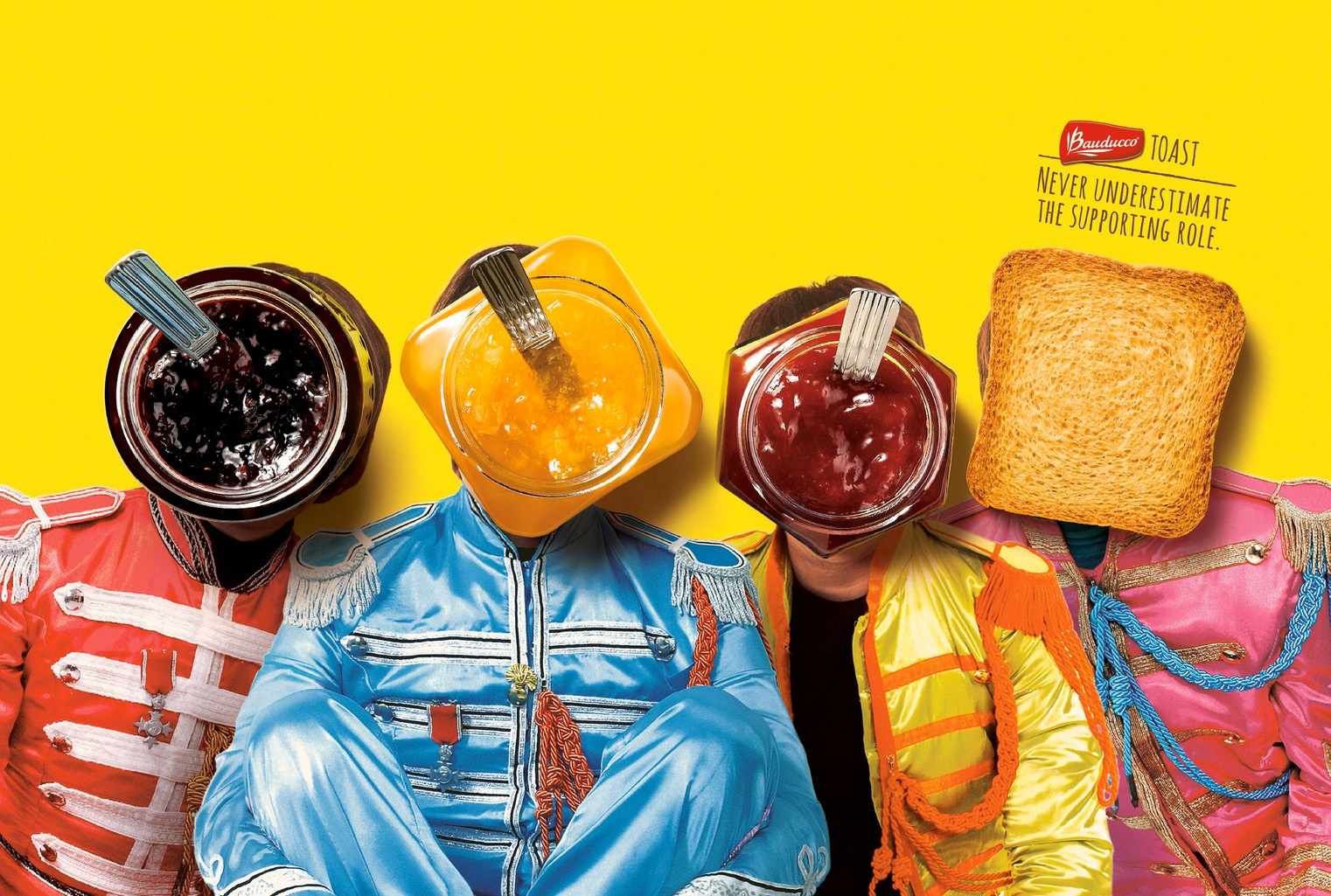
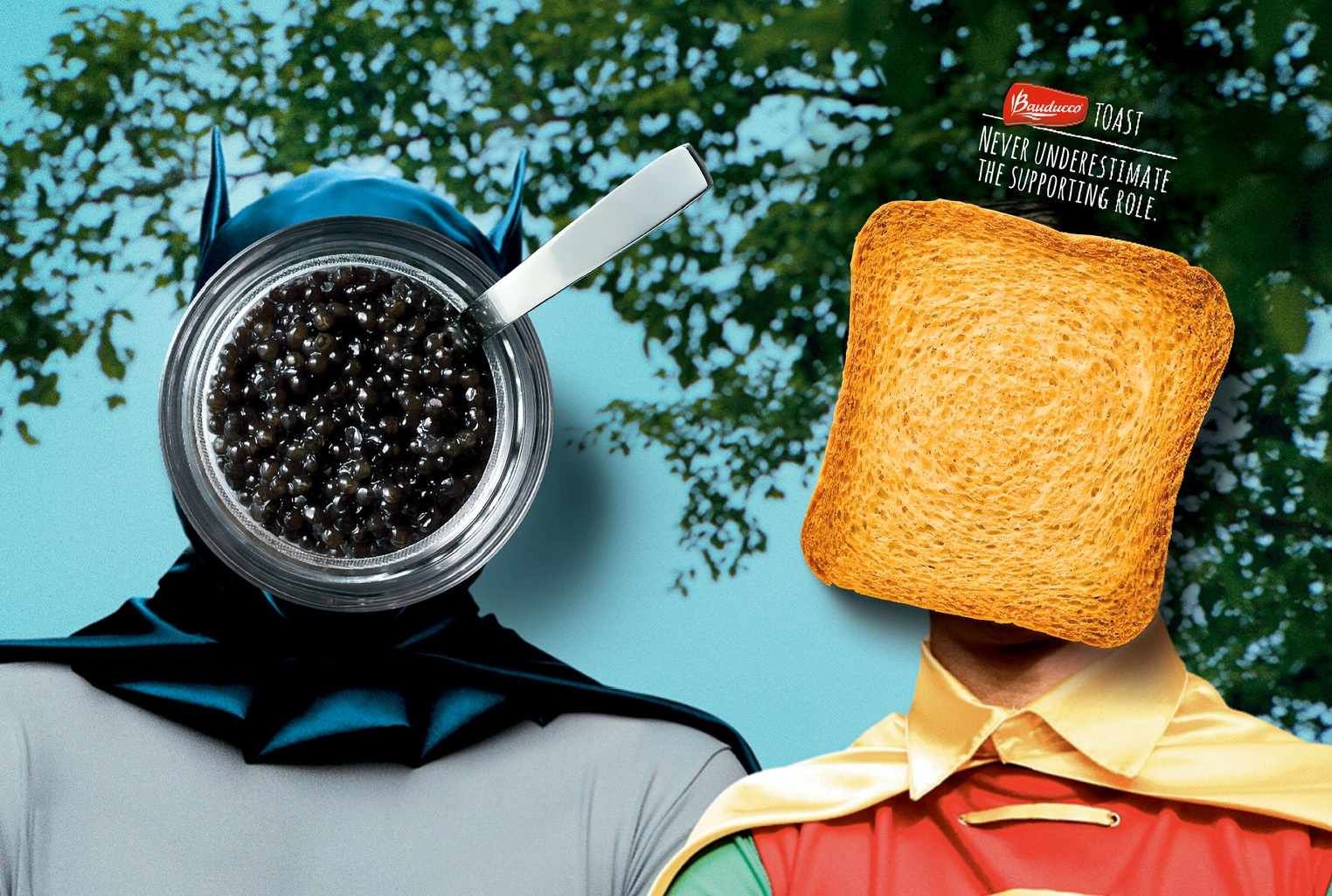
Biscotte advertising

Advertising for "Biscottes" in Brazil: "Never underestimate the supporting role"
(Agency : L AlmapBBDO, São Paulo, Brazil, for the brand of French toasts Bauducco)
 
 
"Never underestimate the supporting role" | Agence : L AlmapBBDO, São Paulo, Brésil, pour la marque de biscottes Bauducco (Cannes Lions 2014)
 

Thursday, 26 June 2014

UK Bread & Bakery sales set to surge - according to new Key Note report

A new report has forecast that sales of bread and bakery products are set to grow strongly in the UK over the next four years, following solid growth in 2013. According to market intelligence provider Key Note, retail sales of bread & bakery products rose by 3.4% year-on-year (in terms of value) in 2013. It said it now expects growth of 10.9% between 2014 and 2018, on the same basis.

The report noted that the growth is expected despite the declining volume sales of traditional loaves in the country, as more customers opt for alternative breads and as everyday diets diversify. The decline is also being aggravated by NPD in competing wheat-based markets such as breakfast cereals and biscuits, as well as the popularity of low-carbohydrate diets. Key Note also found that consumers are eating bread on a less regular basis.

The report found that the growth in 2013 was helped by the effects of inflation on retail prices, as well as the demand for more expensive speciality breads, particularly gluten-free variants.
NamNews - Thursday 26th June 2014

Edinburgh firm selling brioche to the French


Genius founder Lucinda Bruce-Gardyne and director Roz Cuschieri. Picture: Gareth Easton
It brings a whole new meaning to sending coal to Newcastle or tea to China.
A classic Parisian treat is being exported to France – from Edinburgh.

More associated with French patisseries than Scottish bakers, brioche is a rich bread which comes in sweet or savoury varieties, usually made with a high egg and ­butter content.

But a Capital-based company has seized the chance to create a gluten-free version for our health-conscious and ­gluten intolerant cousins across the Channel.

Genius Gluten Free’s tempting snack is now on the shelves of more than 200 major supermarkets across France. The firm claims that it is the first major company to supply gluten-free products in French stores. As well as its brioche, Genius will also sell sandwich breads, bloomers and muffins in 220 Carrefour hypermarkets, as well as ­selected Auchan, Cora and E Leclerc stores.

The “sans gluten” products will be sold alongside freshly baked goods in the mainstream bakery section, with special packaging designed for the French market.

Genius Chief Executive Roz Cuschieri said that France has one of the fastest growing gluten-free markets in Europe, which is tipped to be worth £160 million by 2018.

She said: “We see a major opportunity to reach out to an increasing number of consumers considering a gluten-free or gluten-light diet as a positive lifestyle choice. We’re delighted to be leading the way as the first major company to offer gluten-free products in the mainstream bakery space in France, and are committed to allowing French consumers to benefit from our innovations in the sector.”

Genius, which employs 450 people, supplies a wide range of products as far afield as Australia, Holland, USA, Spain and United Arab Emirates, including gluten-free breads, rolls, crumpets, pancakes, ­croissants, pain au chocolate, brioche, pies and pastry.

The firm was set up by professional chef Lucinda Bruce-Gardyne after she struggled to find good quality gluten-free and wheat-free bread suitable for her gluten intolerant son.The latest unlikely Scottish export comes after Cramond mum Anna Louise Simpson launched a trade mission to sell her range of herbal teas to China and Japan.

In 2012, Mrs Simpson embarked on a seven-day trade mission to the Far East, backed by the Scottish ­Government, to promote her Mama Tea range to countries famed for their blends.

Source: http://www.edinburghnews.scotsman.com/news, 25th June 2014